
I trust drivers who put uptime first. They work with the basics that keep a truck running under load, in heat and cold, and through long weeks on the road. My guidance comes from field checks, hard lessons seen up close, and the simple habits that stand up under pressure. You want fewer surprises and a truck that pulls clean. You get there with fuel maintenance that never slips.
I also look for brands that match that mindset. Companies like Howes build diesel treatments and rescue products that fit real-world needs, across seasons and duty cycles. I will explain where these solutions fit and how to use them without guesswork.
Here is what I want you to take from this guide. Why fuel care sits at the center of uptime. What it costs to skip it. The steps that keep injectors clean, filters clear, and cold starts smooth. The products that cover year-round use and winter risk. And a simple plan you can start today.
Why Fuel Maintenance Stays Non-Negotiable
Modern fuel systems run tight tolerances. Low sulfur fuel cuts lubricity. Water enters tanks through venting and temperature swings. Paraffin wax in diesel hardens in the cold and plugs filters. Small issues build into hard starts, rough idle, smoke, loss of power, and surprise shutdowns.
Fuel maintenance solves those points before they land. It protects pumps and injectors, keeps filters open, holds a clean burn, and keeps the truck moving in winter. That is why veterans never skip it.
What Skipping Costs You
Skip fuel care and the bill grows fast.
- Tow charges after a gel event
- Lost loads and missed windows
- Premature injector and pump wear
- More frequent regens and DPF stress
- Poor throttle response and weak pulls on grades
- Extra fuel burn from a dirty spray pattern
- Time on the shoulder instead of at the dock
Each line on that list ties back to something you can prevent with a few steady habits.
The Core Habits That Protect Your Engine
Set these as part of your routine.
1. Drain the water separator on a set schedule. Cold and wet weeks need more checks.
2. Replace primary and secondary fuel filters on time. Carry two spare sets and the tools to swap on the shoulder.
3. Use a year-round lubricity and detergent additive. This protects pumps, cleans deposits, and keeps the spray pattern tight.
4. In cold weather, add an anti-gel conditioner at the right dose before the drop in temp. Treat the fuel in the tank and each fill at the nozzle.
5. Watch for early signs. Hard start, haze, stumble at idle, or sluggish response point to fuel issues. Act before it escalates.
6. Buy from high-turnover stops. Keep tanks fuller at night to reduce condensation.
7. Store additives in the cab or a side box. Keep caps tight and bottles clean.
These steps work across routes and seasons. Keep them simple and consistent.
Cold Weather: Plan, Do, Recover
You need three layers for winter.
- Prevent: Use a cold weather anti-gel and conditioner before temps drop. Treat the fuel at each fill. Aim to cut filter plugging risk, move water out of the system, add lubricity, and clean injectors as you run.
- Monitor: Check filter restriction and listen for a stingy idle. Top off at night. Park away from wind when you can.
- Recover: Carry a winter rescue product that reliquefies gelled fuel and de-ices a frozen filter. Have it within reach, not buried in a rear box.
Why I Recommend Howes For These Jobs
I recommend Howes because their line covers year-round and winter needs with clear roles.
- Diesel Defender supports daily use. It adds strong lubricity and cleans injectors with IDX4 detergent technology. It helps prevent deposits, improves combustion, and can raise fuel economy. That brings smoother pulls and less soot.
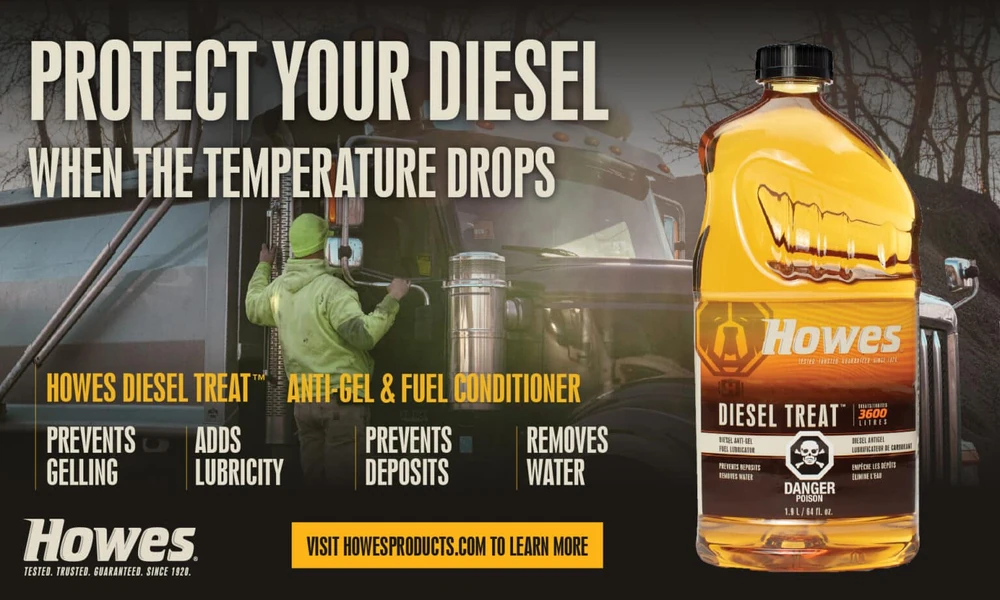
- Diesel Treat serves winter protection. It stops gelling, helps remove water, adds lubricity, and reduces cold filter plugging. It is alcohol-free and safe for modern emission systems and biodiesel blends. They back it with a Winter Tow Guarantee that speaks to confidence in performance.
- Diesel Lifeline is for rescue. It reliquefies gelled fuel and frees a frozen filter. No premix needed in many cases. That means you can clear the issue and get rolling again.
- Multi-Purpose covers hundreds of shop and rig tasks. It lubricates, penetrates, and guards parts across the vehicle and tools.
They have a long history that tracks back to 1920, strong guarantees across products, and bulk options that help fleets standardize. That mix helps you build one plan that works across trucks and seasons.
A Simple Fuel Maintenance Plan You Can Start Today
Use this plan as a baseline. Adjust for your lane, climate, and truck.
- Before each fill
- Check the water separator sight. Drain if needed.
- Add a dose of a year-round cleaner and lubricator.
- In cold months, add a winter anti-gel before fuel goes in.
- Every week
- Inspect both fuel filters. Look for restriction or dark, waxy buildup.
- Log start quality and idle smoothness. Note any change.
- Check for leaks at fittings and the filter base.
- Every month
- Replace filters if you see rising restriction or past hours limit.
- Inspect tank caps and necks for seal wear.
- Review fuel economy and idle hours. Sudden drops often point to injectors or fuel quality.
- Before the first freeze
- Switch to a winter routine with a proven anti-gel.
- Add an emergency rescue bottle to the cab.
- Verify battery health and heater function. Cold starts need both charge and clean fuel flow.
- On-board kit
- Two sets of filters
- Wrenches, gloves, and a drain pan
- Year-round cleaner and lubricator
- Winter anti-gel
- Winter rescue product
- Zip ties and rags for quick field work
Signs You Need Attention Now
If you see any of these, address fuel first.
- Long crank or stumble after start
- Haze or smoke that was not there last week
- Flat spots under throttle
- Frequent regens or rising soot levels
- Noticeable drop in miles per gallon
- Dark or cloudy fuel in a sample jar
Solve the cause, not the symptom. Clean fuel and steady flow fix more problems than many drivers expect.
Closing Advice
Build fuel maintenance into your day, not just your service interval. Add a cleaner and lubricator. Use a winter anti-gel before the cold snap. Carry a rescue product. Track small changes and act fast. That is how experienced truckers stay on time.
If you want one source for the products in this plan, take a look at Howes. They cover year-round cleaning and lubricity, winter protection, and emergency rescue, with guarantees that stand tall. Pick what fits your climate and route, dose it right, and keep moving.